

What Is WSQ Workplace Safety and Health Level 1? A Complete Guide

If you work in Singapore’s cleaning, facilities management, food and beverage, security, or any other service industry environment, workplace safety is not just a matter of good practice — it is a legal obligation. Every worker in Singapore operates within the framework of the Workplace Safety and Health (WSH) Act, and every employer has a duty to ensure that their staff understand and can apply safe work practices in their specific work environment.

The WSQ Workplace Safety and Health Practices Level 1 course is the formally assessed, nationally recognised WSQ qualification that develops this competency for workers in Singapore’s service and built environment sectors.

Table of Contents

What Is the WSQ Framework?

WSQ stands for Workforce Skills Qualifications — Singapore’s national credentialling framework for working adults, administered by SkillsFuture Singapore (SSG). WSQ qualifications are developed to nationally recognised competency standards, assessed by accredited assessors, recorded on your SkillsFuture Skills Passport, eligible for SkillsFuture Credit and subsidies, and recognised by employers across Singapore as evidence of formally assessed competency.

What Is the WSQ Workplace Safety and Health Practices Level 1 Course?

The Workplace Safety and Health Practices Level 1 course is a WSQ-aligned programme that develops foundational workplace safety and health competency for workers in Singapore’s service industries — cleaning, facilities management, food service, security, and related built environment sectors.

What the Course Is Designed to Achieve

  • Develop a clear, practical understanding of Singapore’s WSH legal framework and specific obligations
  • Identify workplace hazards relevant to the specific work environment
  • Understand and apply the risk assessment process
  • Follow and apply safe work procedures for hazardous tasks
  • Select, use, maintain, and dispose of personal protective equipment correctly
  • Handle, store, and dispose of workplace chemicals safely and in compliance with regulations
  • Know when and how to report workplace incidents and near misses
  • Respond appropriately to workplace emergencies

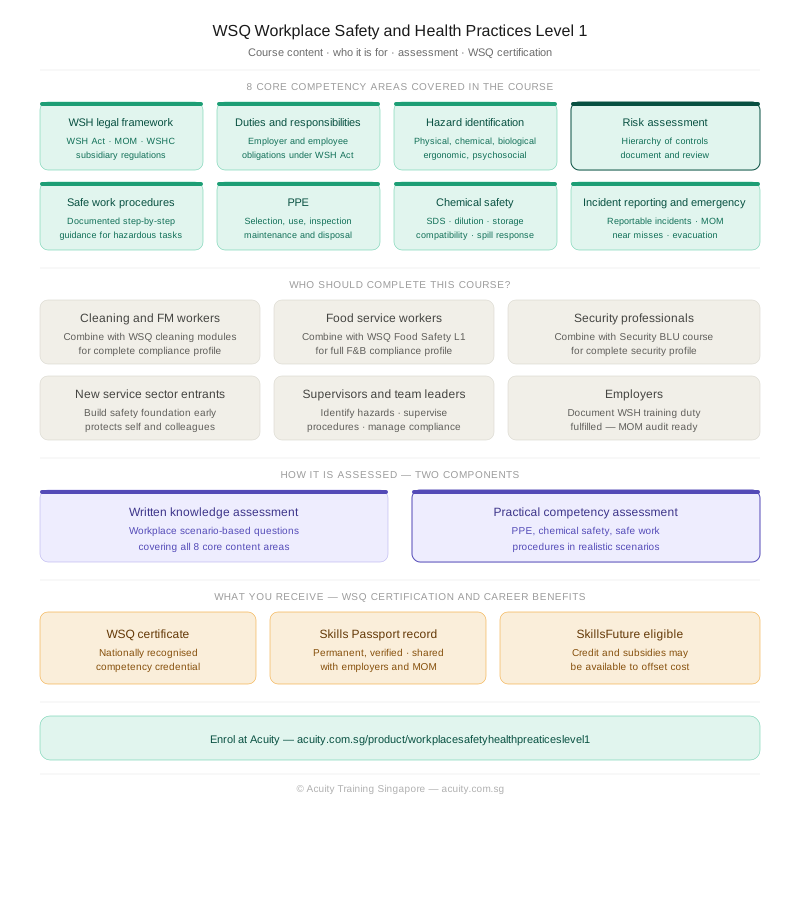
What Does the WSQ Workplace Safety and Health Practices Level 1 Course Cover?

The course is structured around the core competency areas that service sector workers in Singapore need to understand and apply. Content is developed to be directly relevant to real workplace situations.

Singapore’s WSH Legal Framework

A foundational understanding of Singapore’s WSH legal framework is essential for every worker and employer. This section covers:

  • The Workplace Safety and Health Act — its purpose, scope, and the risk-based approach it establishes
  • The role of the Ministry of Manpower (MOM) as the primary WSH enforcement authority
  • The role of the Workplace Safety and Health Council (WSHC) in setting standards and supporting compliance
  • Key subsidiary regulations relevant to service sector workplaces
  • The distinction between prescriptive and risk-based compliance

Duties and Responsibilities Under the WSH Act

Workers need to understand their own specific responsibilities — and the responsibilities of those around them. This section covers:

  • The duty of care that employers owe to their workers — safe environment, safe systems, PPE, and adequate training
  • WSH responsibilities of employees — taking reasonable care, following procedures, using PPE, reporting hazards
  • WSH obligations of building owners, principals, and contractors
  • The consequences of breaching WSH duties — for both employers and individual workers

Hazard Identification

Identifying workplace hazards is the first step in the risk management process. This section covers:

  • The main categories of workplace hazard — physical, chemical, biological, ergonomic, and psychosocial
  • Common physical hazards in service sector environments — slips, trips, falls, manual handling, equipment
  • Chemical hazards — including cleaning agents, disinfectants, and other chemicals in cleaning and FM environments
  • Biological hazards — including exposure to infectious materials in healthcare and food service
  • Ergonomic hazards — repetitive tasks, awkward postures, and manual handling risks

Risk Assessment

Risk assessment is the practical application of Singapore’s risk-based WSH framework. This section covers:

  • The risk assessment process — hazard identification, risk evaluation, and control measure selection
  • The hierarchy of controls — elimination, substitution, engineering controls, administrative controls, and PPE
  • How to evaluate risk — considering likelihood and potential severity of harm
  • Documenting risk assessment findings under the WSH (Risk Management) Regulations
  • Reviewing risk assessments when conditions change

Safe Work Procedures

Safe work procedures translate risk assessment outcomes into practical, step-by-step guidance. This section covers:

  • What a safe work procedure is and why documented procedures are required for hazardous tasks
  • How safe work procedures are structured — task, hazards, control measures, emergency procedures
  • Following safe work procedures in practice — applying them consistently
  • Common safe work procedures for service sector environments — chemical handling, equipment operation, wet floor management

Personal Protective Equipment

PPE is the last line of defence in the hierarchy of controls. This section covers:

  • Types of PPE relevant to service sector work — gloves, eye protection, respiratory, hearing, footwear
  • How to select appropriate PPE for a specific task and hazard
  • Correct donning, doffing, and adjustment of PPE
  • Inspection of PPE — recognising damage or degradation
  • Cleaning, storage, and disposal of PPE

Chemical Safety

Chemical safety is particularly critical for cleaning, FM, and food service workers. This section covers:

  • Understanding Safety Data Sheets (SDS) — mandatory chemical safety documentation
  • Correct dilution of cleaning concentrates
  • Compatibility of chemicals — some combinations create toxic gases and must never be mixed
  • Safe storage of chemicals — segregation, labelling, and ventilation requirements
  • Emergency procedures for chemical spills and exposure

Incident Reporting

Prompt and accurate incident reporting is both a legal obligation and a safety improvement tool. This section covers:

  • What constitutes a reportable workplace incident under the WSH Act
  • Reporting timeframes — deadlines within which different categories of incident must be reported to MOM
  • Near-miss reporting — its importance as a leading indicator of systemic safety issues
  • The role of the individual worker in incident reporting

Emergency Response

Every worker should know what to do when a workplace emergency occurs. This section covers:

  • Types of workplace emergencies — fire, chemical spill, medical emergency, evacuation
  • Emergency response roles — workers, first aiders, and emergency coordinators
  • Evacuation procedures — routes, assembly points, and following instructions calmly
  • Basic first aid awareness — recognising when first aid is required and how to summon help

How Is the WSQ Workplace Safety and Health Practices Level 1 Course Assessed?

Written Knowledge Assessment

A theory-based assessment covering the knowledge content of the course — Singapore’s WSH legal framework, duty-holder obligations, hazard identification, risk assessment, safe work procedures, PPE, chemical safety, incident reporting, and emergency response. Questions are structured around realistic workplace scenarios relevant to service sector environments.

Practical Competency Demonstration

Candidates are assessed on their ability to apply WSH knowledge and skills in realistic workplace scenarios — including demonstrating correct PPE selection and use, applying chemical safety procedures, following safe work procedures, or responding to simulated workplace incidents.

WSQ Certificate of Competency

Candidates who meet the required standard receive a WSQ Certificate of Competency recorded on their SkillsFuture Skills Passport. This provides employers with verified evidence that the worker has demonstrated WSH competency, and demonstrates to MOM inspectors that the employer has satisfied their duty to provide adequate training.

Who Should Complete the WSQ Workplace Safety and Health Practices Level 1 Course?

Cleaning and Facilities Management Workers

Cleaning and FM workers are exposed to a range of workplace hazards daily. Combining WSH training with WSQ cleaning modules — Washroom Maintenance Level 1, Horizontal Surface Maintenance Level 1, and Furniture and Furnishing Maintenance Level 1 — creates a comprehensive professional profile covering technical competency and the safety framework within which it must be conducted.

Food Service and Institutional Catering Workers

F&B and institutional food service environments combine WSH hazards from heat, sharp implements, wet floors, and chemical cleaning agents. WSH training complements WSQ Food Safety Level 1 certification to create a complete compliance profile for food service roles.

Security Professionals

WSH training complements security licensing — such as the Security Officer BLU Course — to develop a complete safety and compliance profile for security roles.

New Entrants to the Service Sector

For workers entering any of Singapore’s service sector industries for the first time, completing the WSQ Workplace Safety and Health Practices Level 1 course as early as possible establishes the safety knowledge foundation that protects them — and their colleagues — throughout their working life.

Supervisors and Team Leaders

For supervisors and team leaders responsible for the safety of their teams, WSH training develops the knowledge to identify hazards, apply the risk assessment process, supervise safe work procedures, manage PPE compliance, and respond to incidents.

Employers Seeking to Demonstrate WSH Compliance

For employers, building a team where all workers hold WSQ Workplace Safety and Health Practices Level 1 certification provides documented evidence that the employer has fulfilled their legal duty to provide adequate WSH training.

How Does the WSQ Workplace Safety and Health Practices Level 1 Support Career Development?

For individual workers, completing the WSQ Workplace Safety and Health Practices Level 1 course provides a nationally recognised qualification on their SkillsFuture Skills Passport, a foundational WSH competency credential that supports progression into supervisory and management roles, enhanced employability as WSH certification becomes increasingly listed as a preferred credential, and practical knowledge that directly improves day-to-day safety on the job.

Can SkillsFuture Credit Be Used for This Course?

Yes. The WSQ Workplace Safety and Health Practices Level 1 course is an approved SSG programme. Eligible Singapore Citizens aged 25 and above may be able to use their SkillsFuture Credit to offset the cost of training. Additional subsidies — including employer co-funding — may also be available. Check with your training provider for the most current funding options.

How Acuity Delivers the WSQ Workplace Safety and Health Practices Level 1 Course

Acuity’s Workplace Safety and Health Practices Level 1 course is delivered by experienced trainers with real-world WSH, cleaning, FM, and service industry backgrounds.

What Learners Can Expect

  • Structured instruction covering all WSQ competency requirements for Workplace Safety and Health Practices Level 1
  • Practical, scenario-based learning applicable to real service sector workplaces
  • Clear assessment preparation for both written and practical assessment components
  • A nationally recognised WSQ qualification on their SkillsFuture Skills Passport
  • Guidance on SkillsFuture Credit and other available subsidies

Frequently Asked Questions

Is the WSQ Workplace Safety and Health Practices Level 1 course mandatory in Singapore?

The WSH Act requires employers to provide adequate training to all employees. While no single programme is universally mandatory, completing the WSQ Workplace Safety and Health Practices Level 1 is the most defensible way for employers to demonstrate that adequate formal WSH training has been provided.

How long does the WSQ Workplace Safety and Health Practices Level 1 course take?

Course duration varies by training provider and delivery format. The programme is designed to be completed efficiently by working adults. Check with your training provider for specific scheduling and duration details.

Do I need any prior WSH qualification to enrol?

No. The Workplace Safety and Health Practices Level 1 is a foundational programme for workers at any career stage — from new entrants to experienced professionals seeking to formalise their WSH knowledge. No prior formal WSH training is required to enrol.

How does this WSQ course support my employer’s WSH compliance?

Under the WSH Act, employers have a legal duty to provide adequate training to employees. Completing the WSQ Workplace Safety and Health Practices Level 1 provides documented, formally assessed evidence that this training duty has been fulfilled — valuable during MOM workplace inspections and following workplace incidents.

Can the WSQ Workplace Safety and Health Practices Level 1 be completed alongside other WSQ courses?

Yes. Many cleaning, FM, food service, and security professionals complete this course alongside their technical WSQ qualifications. There is no restriction on combining WSH training with other WSQ programmes — and for most service sector roles, combining WSH with relevant technical qualifications creates the most complete compliance profile.

Download Brochure

Please fill in the following details so we can assist you better.


    This will close in 0 seconds

    Enquire now

    Fill up your contact details below so we can get in touch with you as soon as possible.