Singapore’s approach to public hygiene is among the most rigorous in the world. The NEA and SFA both set and enforce hygiene standards affecting food establishments and public facilities. The consequences of failing to meet washroom maintenance standards are real and measurable:
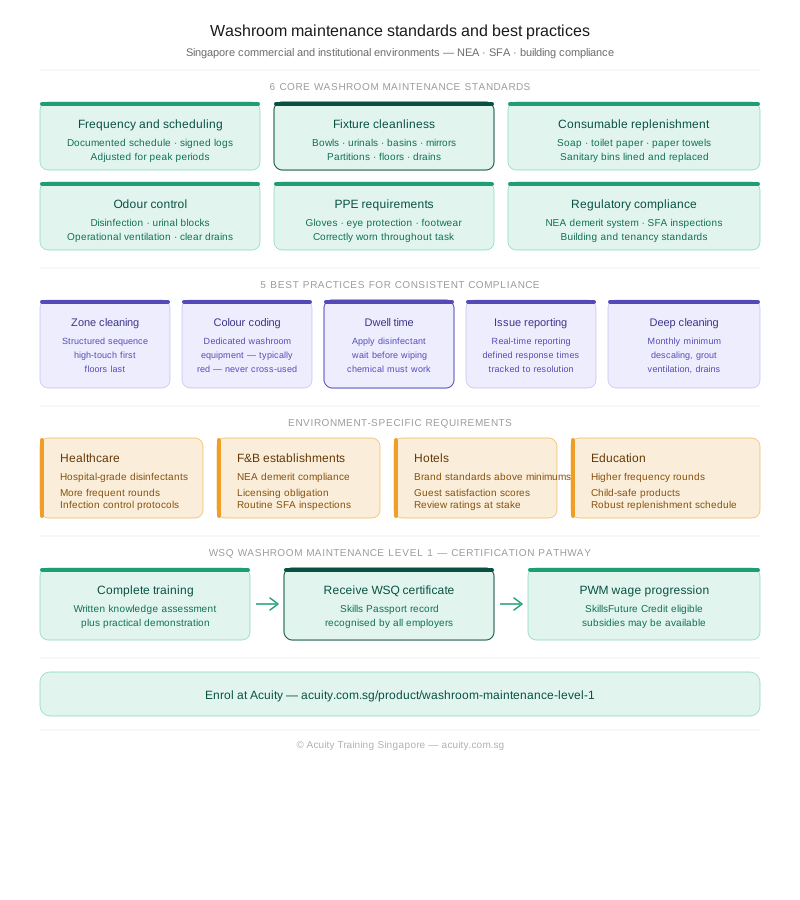
Washroom maintenance standards in Singapore’s commercial and institutional environments typically define minimum cleaning frequencies. Best practice requires:
Every fixture and surface in a commercial washroom must be maintained to a defined cleanliness standard. Key fixtures include:
Toilet bowls and seats
Urinals
Handwashing basins
Floor surfaces
Consumable replenishment — soap, toilet paper, paper towels, and sanitary disposal supplies — is a core component of washroom maintenance. Standards require:
Odour is one of the most immediate indicators of washroom hygiene quality. Effective odour control requires regular cleaning and disinfection of all odour-generating surfaces, correct use of urinal blocks and deodorising products, adequate operational ventilation, and prompt clearing of blocked or slow-draining floor drains.
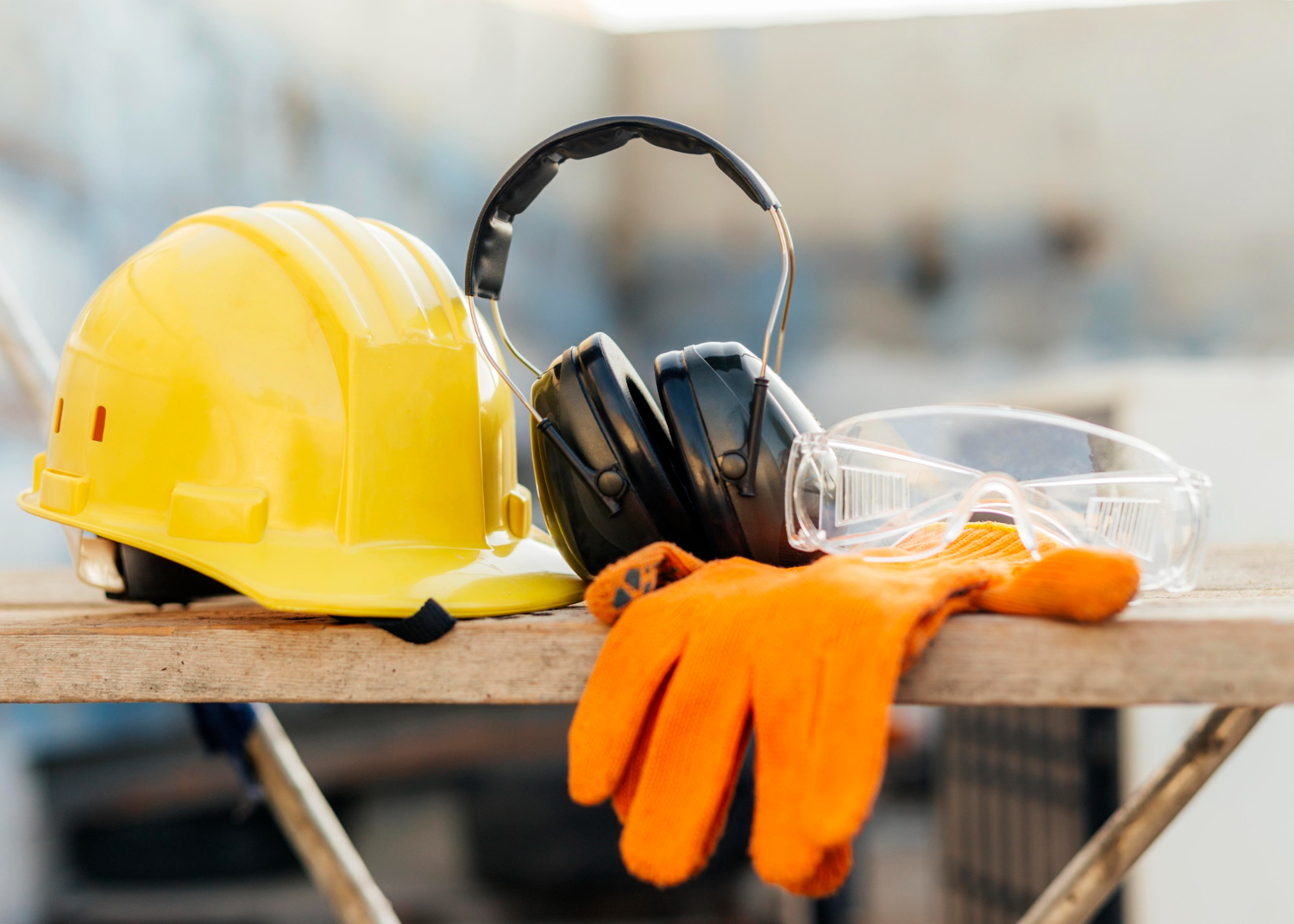
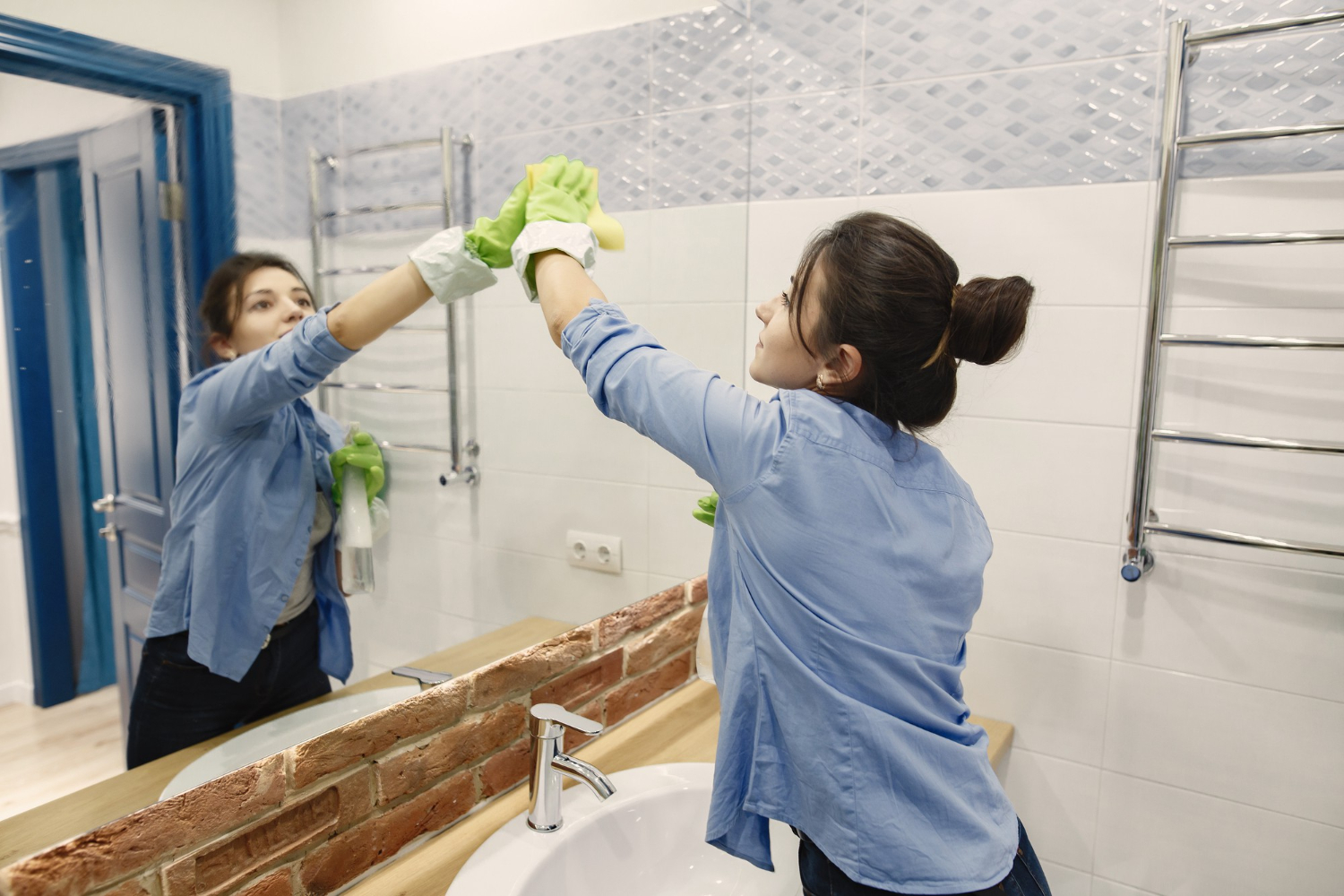
Washroom cleaning involves exposure to biological contaminants, cleaning chemicals, and disinfectants. Correct PPE must be worn during all washroom cleaning tasks:
Meeting minimum standards is the floor — not the ceiling. The best-maintained washrooms in Singapore consistently exceed minimum requirements through structured best practices.
Zone cleaning divides the washroom into defined areas — each cleaned in a specific sequence to prevent cross-contamination. A standard sequence:
Colour-coded equipment systems are one of the most effective cross-contamination prevention measures. Dedicated equipment colours — typically red — are used for washroom cleaning and never used in other areas. Colour coding applies to mops, buckets, cloths, sponges, and all reusable cleaning tools.
Disinfectants require a minimum contact time — known as dwell time — to be effective. A disinfectant wiped off immediately after application has not had time to work. Best practice requires applying disinfectants and allowing the specified dwell time before wiping or rinsing, and training staff to understand why dwell time matters.
Even the best-maintained washrooms experience unexpected issues. Best practice requires a clear, fast process for identifying and reporting issues — with defined response times for different categories of problem and tracking to resolution.
Routine cleaning maintains daily hygiene standards — but periodic deep cleaning addresses scale, grout discolouration, ventilation buildup, and fixture deterioration. Most commercial washrooms benefit from deep cleaning at least monthly, covering descaling of fixtures, grout cleaning, ventilation cleaning, and drain clearing.
Washroom maintenance in hospitals, clinics, and care facilities operates under heightened standards. Key additional requirements include hospital-grade disinfectants, more frequent cleaning cycles, strict PPE protocols, and documented infection control procedures integrated into broader infection prevention frameworks.
Food establishments licensed by the SFA are subject to routine hygiene inspections that include washroom facilities. NEA demerit points can be issued for washroom hygiene failures — making washroom maintenance a licensing compliance issue, not just a facilities management matter.
Hotel washrooms are maintained to brand standards that typically exceed regulatory minimums. Guest satisfaction scores, online review ratings, and brand audit outcomes all depend heavily on washroom presentation and hygiene.
School and childcare facility washrooms serve a population with limited hygiene awareness. Maintenance standards must account for higher rates of soiling, spillage, and fixture misuse — requiring more frequent cleaning rounds and robust consumable replenishment schedules.
The Washroom Maintenance Level 1 course is a WSQ-aligned programme that develops formal, nationally assessed competency in washroom cleaning for cleaning professionals at all career stages.
The course includes both a written knowledge assessment and a practical competency demonstration. Candidates who meet the required standard receive a WSQ certificate recorded on their SkillsFuture Skills Passport and recognised by employers across Singapore’s cleaning and facilities management industry.
Minimum cleaning frequencies vary by facility type and regulatory requirements. High-traffic commercial environments typically require multiple cleaning rounds per day. Building operators should consult their relevant regulatory and tenancy requirements for their specific facility.
Commercial washroom cleaning requires products appropriate for each surface and task — including toilet bowl cleaners, urinal descalers, multi-surface disinfectants, and glass cleaners. Products must be selected for surface compatibility, effective contact time, and safety. WSQ washroom maintenance training covers product selection in detail.
The most effective measure is a colour-coded equipment system — using dedicated cleaning tools for washroom areas never used elsewhere. Combined with correct PPE use, zone cleaning sequences, and thorough hand hygiene, colour coding significantly reduces cross-contamination risk.
Most commercial washrooms benefit from deep cleaning at least monthly. Higher-traffic or higher-risk environments may require more frequent deep cleaning. Healthcare environments typically require weekly or more frequent deep cleaning.
Yes. The course is an approved WSQ programme eligible for SkillsFuture Credit and potentially other subsidies. Check with Acuity for the most current funding options and eligibility criteria.
Please fill in the following details so we can assist you better.
This will close in 0 seconds