

A security officer course in Singapore is a structured training programme approved by the Singapore Police Force (SPF) that equips candidates with the knowledge, skills, and competencies required to work legally as a licensed security officer.
The foundational programme is the Basic Licensing Unit (BLU) Course — a mandatory requirement for anyone applying for their first Security Officer Licence in Singapore. Without completing this course, candidates cannot legally work in the security industry regardless of prior experience.
The security officer course is designed for:
There are no formal academic prerequisites — but candidates must meet the SPF’s basic eligibility requirements before enrolling.
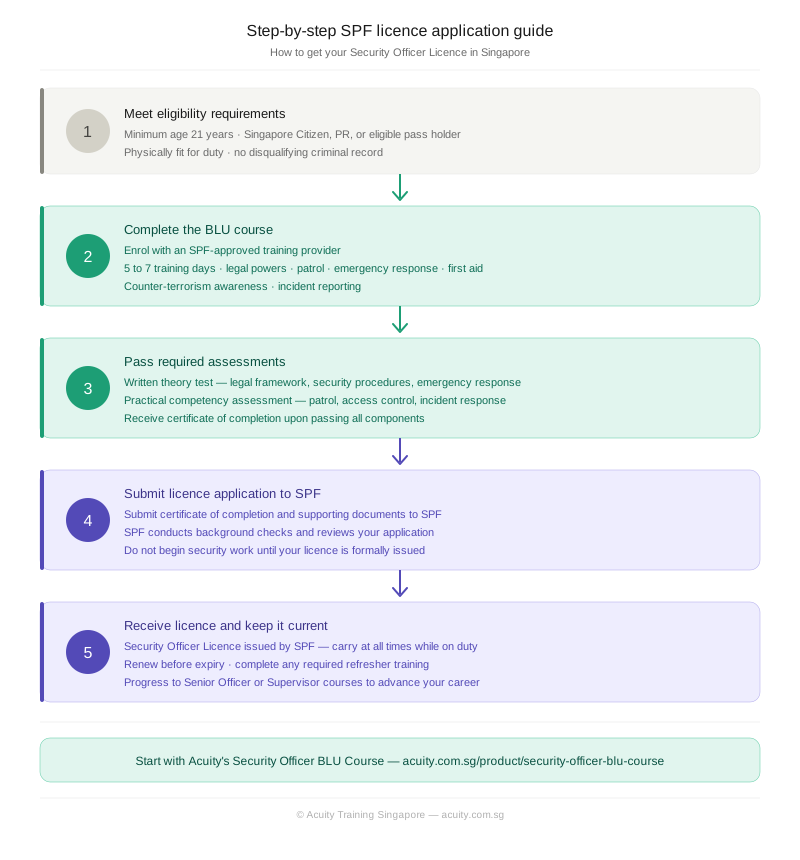
Before enrolling in a security officer course in Singapore, candidates must meet the following eligibility criteria set by the SPF:
Candidates must be at least 21 years of age at the time of application.
Applicants must be a Singapore Citizen, Permanent Resident, or hold an eligible employment or work pass. Not all pass types qualify — check with your training provider before enrolling.
Security officers are required to perform physical duties including patrol, access control, and emergency response. Candidates must be physically fit and free from conditions that would prevent them from performing these duties safely.
Candidates must not have any disqualifying criminal convictions. A clean record is a prerequisite for SPF licence approval. If you have a criminal history, check your eligibility with the SPF directly before enrolling.
A basic level of English proficiency is required as course materials and assessments are conducted in English.
The BLU Course is a comprehensive programme covering both the theoretical and practical competencies required of a licensed security officer in Singapore.
Candidates learn about the Private Security Industry Act, the legal powers and limitations of a security officer, and the regulatory framework governing security operations in Singapore. Understanding the law is essential — security officers must know exactly what they are and are not permitted to do.
The course covers standard operating procedures for patrol duties, access control, visitor management, and perimeter security. Candidates learn how to conduct effective patrols and identify potential security risks.
Clear, accurate reporting is a core skill for any security officer. The course teaches candidates how to document incidents, communicate effectively with supervisors and emergency services, and maintain accurate records.
Candidates are trained in standard emergency response protocols — including fire evacuation, medical emergencies, bomb threats, and how to manage crowd situations safely and effectively.
A foundational understanding of first aid procedures is included, covering how to respond to common workplace injuries and medical emergencies while awaiting professional assistance.
Given Singapore’s security environment, the course includes awareness training on identifying suspicious behaviour, responding to potential terrorist threats, and following established protocols for high-risk incidents.
The BLU Course typically runs over several structured training days. The exact duration varies by training provider and scheduling format.
As a general guide:
After completing the course, candidates must still submit their licence application to the SPF — which adds additional processing time before they can begin work.
The security officer course includes formal assessments that must be passed before a certificate of completion is awarded.
A theory-based assessment covering the legal framework, security procedures, and emergency response knowledge covered during the course.
Candidates are assessed on their ability to demonstrate key practical competencies — including patrol techniques, access control procedures, and incident response protocols — under simulated conditions.
Candidates who do not meet the required standard on their first attempt are typically permitted to resit the relevant assessment components. Check with your training provider for their specific resit policy and any associated fees.
Completing the security officer course is the first step — but it does not automatically grant you a licence. Here is what happens after you complete your training:
Once you pass all required assessments, your training provider issues a certificate of completion. This is the key document required for your SPF licence application.
Submit your application through the SPF’s official channels, along with your certificate of completion and any other required supporting documents.
The SPF reviews your application and conducts any necessary background checks. Processing time varies — plan accordingly and do not arrange employment start dates until your licence has been confirmed.
Once approved, your Security Officer Licence is issued. This licence must be carried at all times while on duty and renewed as required by SPF regulations.
Completing your security officer course and obtaining your licence is the beginning of a structured career pathway in Singapore’s security industry.
After gaining field experience as a licensed officer, you can enrol in the Senior Security Officer Course to take on greater responsibilities including team leadership, advanced threat assessment, and crisis management.
The Security Supervisor Course equips experienced officers with the management and operational planning skills needed to lead a security team and manage client relationships at a supervisory level.
Senior professionals can pursue specialist WSQ Security Elective Courses and management development programmes to advance into strategic security management, risk advisory, and corporate security roles.
Choosing the right training provider for your security officer course matters. Here is what to evaluate:
The provider must be officially approved by the Singapore Police Force. Always verify this before enrolling — an unapproved course will not satisfy SPF licensing requirements.
Look for trainers with genuine operational security experience, not just theoretical knowledge. Real-world experience translates into more relevant and practical training.
Many candidates are balancing job searches or other commitments alongside their training. Check whether the provider offers scheduling options that suit your availability.
The best providers support candidates through the SPF application process after the course — not just during training. This is especially valuable for first-time applicants unfamiliar with the process.
Understand exactly what is included in the course fee — materials, assessments, resits — and whether SkillsFuture or other subsidies are accepted before committing.
Acuity’s Security Officer BLU Course is structured to give first-time candidates the complete preparation they need — from foundational knowledge through to SPF licence application support.
For candidates looking to advance beyond entry level, Acuity also offers the Senior Security Officer Course, Security Supervisor Course, and WSQ Security Elective Courses — providing a complete career development pathway within a single training provider.
For professionals looking to complement their security career with broader workplace skills, Acuity also offers Workplace Safety and Health training and Customer Management courses — practical additions for security officers working in customer-facing environments.
No prior security experience is required. The BLU Course is designed for first-time entrants and covers all the foundational knowledge and skills needed to qualify as a licensed security officer in Singapore.
Course fees vary by provider. Eligible candidates may be able to offset costs using SkillsFuture credits or other government subsidies. Contact your training provider directly for current fee information and funding options.
No. You must hold a valid Security Officer Licence before you can legally work in a security role in Singapore. Do not accept employment as a security officer until your licence has been formally issued by the SPF.
Security Officer Licences in Singapore are issued for a fixed period and must be renewed before expiry. Check the SPF’s current requirements for renewal timelines and any additional training that may be required at renewal.
Some providers offer course materials or support in additional languages. Check with your training provider about language options available, particularly if English is not your first language.
Please fill in the following details so we can assist you better.
This will close in 0 seconds