Many candidates assume that full-time work and serious IELTS preparation are incompatible. This is not true. What matters most is not the total number of hours you study, but the consistency and quality of those hours.
Working professionals often have several advantages over full-time students:
- Greater motivation — a clear career, migration, or academic goal driving preparation
- Better time management habits developed through professional experience
- Higher discipline when it comes to meeting deadlines and commitments
- Real-world English exposure through workplace communication
With the right strategy, even one to two focused hours per day can produce significant improvement over six to twelve weeks.
1. Set a Clear Goal and Book Your Test Date First
The single most effective thing you can do before opening a single practice book is to book your IELTS test date.
Why This Works
- A fixed test date creates a real deadline and prevents indefinite postponement
- Knowing exactly how many weeks you have allows you to build a realistic study plan
- It forces you to commit — which is the hardest step for busy professionals
How to Choose Your Test Date
- Assess your current English level honestly — consider taking a free diagnostic test online
- If your current level is Band 5.5 to 6.0, allow at least eight to ten weeks of preparation
- If you are targeting Band 7.0 or above, allow ten to twelve weeks minimum
- Choose a test date that avoids your busiest work periods — end-of-quarter deadlines, annual reviews, or major project launches
Once your test date is confirmed, work backwards to build your weekly study schedule.
2. Build a Weekly Study Schedule That Fits Your Life
Consistency matters more than intensity. A study schedule you can actually follow beats an ambitious plan you abandon after two weeks.
Realistic Time Blocks for Working Professionals
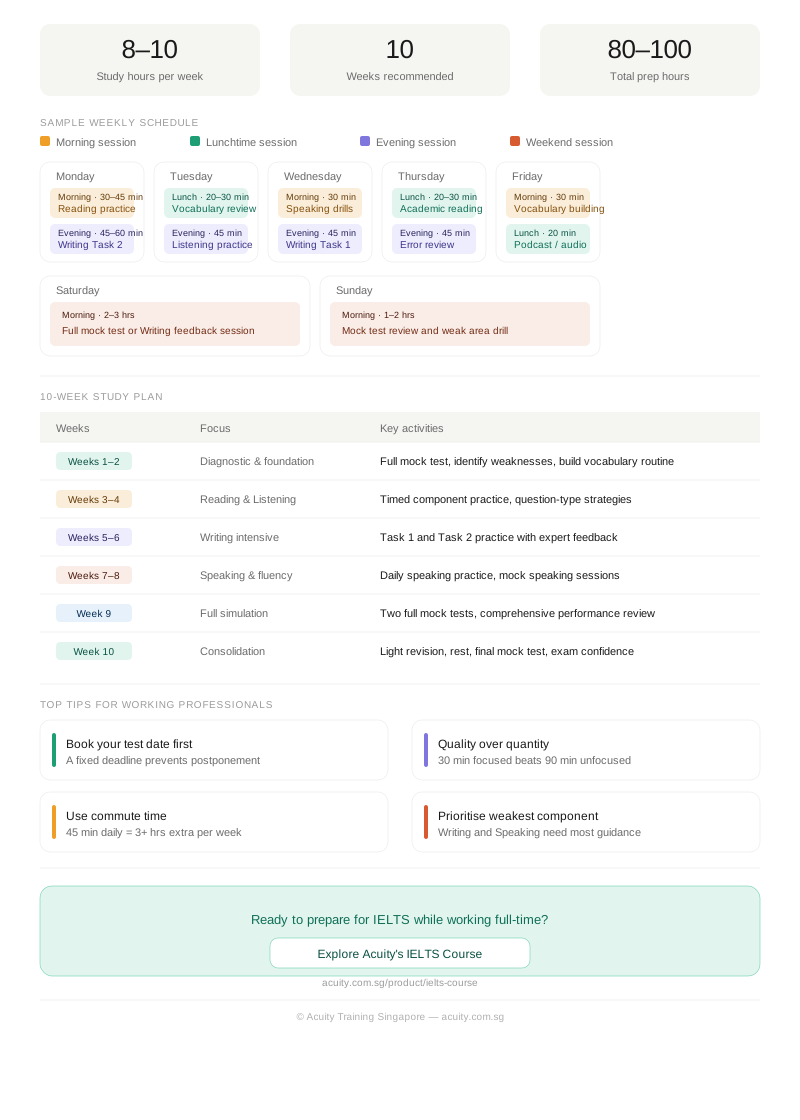
- Morning sessions (30–45 minutes) — Before work is often the most focused, undisturbed time of day. Use it for Reading practice or vocabulary building
- Lunchtime sessions (20–30 minutes) — Review flashcards, listen to a short podcast, or read a short academic passage
- Evening sessions (45–60 minutes) — After work, use this time for Writing practice or Speaking drills. Avoid leaving your heaviest cognitive tasks to late evening when focus is lowest
- Weekend sessions (2–3 hours per day) — Reserve weekends for full mock tests, Writing task feedback, and consolidating the week’s learning
Weekly Time Target
Aim for eight to ten hours of focused study per week. This is achievable for most working professionals and, maintained consistently over ten weeks, provides approximately 80 to 100 hours of preparation — more than enough for most band score targets.
3. Focus on Your Weakest Component First
IELTS is scored across four components — Listening, Reading, Writing, and Speaking. Your overall band score is the average of all four, and a weak component can pull your entire score down significantly.
How to Identify Your Weakest Area
- Take a full diagnostic mock test early in your preparation
- Review your scores component by component
- Identify not just which score is lowest, but which question types within that component cause the most errors
Where to Direct Your Energy
- Writing is the component most professionals find hardest to self-improve — it requires examiner-style feedback on structure, coherence, vocabulary, and grammar. Prioritise this if it is a weakness
- Speaking requires real-time practice and builds confidence only through repetition. If this is a weakness, practise daily — even five minutes of speaking aloud makes a difference
- Reading improves significantly with consistent timed practice and strategy work — skimming, scanning, and question-type familiarity
- Listening benefits from daily passive exposure — podcasts, TED Talks, and audio news programmes supplement formal practice effectively
4. Use Commute Time and Dead Time Strategically
One of the biggest advantages working professionals overlook is the amount of passive learning time available during a typical workday.
Ways to Use Commute and Transition Time
- Listen to IELTS-style audio or English podcasts during your commute
- Review vocabulary flashcards on your phone while waiting or during short breaks
- Read short academic or journalistic articles during lunch
- Practice mental note-taking — summarising meetings or conversations in English in your head
A 45-minute daily commute across a five-day week gives you over three hours of additional exposure per week — without touching your designated study time.
5. Prioritise Quality Over Quantity in Study Sessions
When time is limited, every study session must be purposeful. Passive reading or listening without active engagement produces much slower improvement than deliberate practice.
Principles of High-Quality Study Sessions
- Set a specific goal for each session — not “study Writing” but “complete one Task 2 essay and self-assess it against the band descriptors”
- Review your errors — understanding why you got something wrong is more valuable than completing more questions
- Simulate exam conditions — timed practice under realistic conditions prepares your mind for the actual test environment
- Keep a vocabulary notebook — record new words with their context, not just their definition
Avoid the trap of feeling productive through volume. Thirty minutes of focused, deliberate practice outperforms ninety minutes of unfocused study time every time.
6. Make English Part of Your Daily Life
Beyond formal study sessions, the fastest improvements come from immersing yourself in English throughout the day. This is especially manageable for professionals who already use English at work.
Practical Immersion Strategies
- Switch your phone, laptop, and social media to English
- Read English-language news publications such as the BBC, Guardian, or Straits Times daily
- Watch English-language documentaries, interviews, or presentations — with subtitles initially, then without
- Write short journal entries or reflections in English each evening
- If you use English at work, treat every email, report, and meeting as a practice opportunity
Over ten weeks, consistent exposure of this kind compounds significantly and improves both Listening and Reading performance with minimal additional time investment.
7. Do Not Neglect Mock Tests
Full-length mock tests are non-negotiable in IELTS preparation, even for busy professionals. They serve multiple purposes that no other study activity can replace.
Why Mock Tests Matter
- They reveal how your component scores interact across the full test
- They build stamina and concentration for a three-hour test environment
- They expose time management weaknesses under pressure
- They allow you to track your progress over the course of your preparation
How to Fit Mock Tests Into a Busy Schedule
- Schedule one full mock test every two to three weeks on a weekend morning
- Treat the mock test as a genuine exam — no interruptions, timed strictly
- Always review the full mock test the same day or the following morning while it is fresh
If a full mock test feels impossible on a given weekend, split it into timed component sessions across two days rather than skipping it entirely.
8. Consider a Structured IELTS Course
Self-study is possible for motivated candidates, but a structured IELTS course accelerates progress in ways that independent study cannot easily replicate — especially for working professionals with limited time.
What a Structured Course Gives You
- A clear curriculum that sequences learning logically — no wasted time deciding what to study
- Expert feedback on Writing and Speaking — the two components hardest to self-evaluate
- Accountability — scheduled classes keep you on track even when motivation dips
- Peer practice — group Speaking practice builds real fluency and confidence
- Efficient preparation — experienced trainers know exactly which skills and question types yield the most marks
For working professionals, the time saved by having an expert guide your preparation often outweighs the time invested in attending classes.
Acuity’s IELTS Course offers flexible scheduling designed specifically for working adults — with options for weekday evenings and weekend classes so preparation fits around your professional commitments.
9. Manage Energy, Not Just Time
Time management alone is not enough. IELTS preparation requires real cognitive effort, and mental fatigue is one of the biggest obstacles for working professionals.
Energy Management Strategies
- Study during your peak focus hours — morning or early evening for most people
- Avoid scheduling heavy study sessions immediately after demanding workdays
- Take genuine rest days — recovery improves retention and prevents burnout
- Keep study sessions shorter and more focused rather than longer and exhausting
- Sleep is your most powerful study aid — never sacrifice sleep for an extra hour of revision
Sustainable preparation over ten weeks will always outperform two weeks of intense study followed by exhaustion and disengagement.
10. Stay Accountable and Track Your Progress
Preparation over several weeks requires sustained motivation. Without external accountability, it is easy for study time to erode when work demands increase.
Accountability Strategies
- Tell a colleague, friend, or family member about your test date — social accountability is powerful
- Keep a simple weekly study log — even a notes app record of what you studied and for how long
- Review your mock test scores at least every two weeks and celebrate incremental progress
- Join a study group or IELTS preparation community online for peer support
If you are taking a course, your trainer and classmates provide built-in accountability that is difficult to replicate through self-study alone.
Sample 10-Week Study Plan for Working Professionals
| Week | Focus | Key Activities |
|---|
| 1–2 | Diagnostic and foundation | Full mock test, identify weaknesses, build vocabulary routine |
| 3–4 | Reading and Listening | Timed component practice, question-type strategies |
| 5–6 | Writing intensive | Task 1 and Task 2 practice with feedback |
| 7–8 | Speaking and fluency | Daily speaking practice, mock speaking sessions |
| 9 | Full test simulation | Two full mock tests, comprehensive review |
| 10 | Consolidation and confidence | Light revision, rest, final mock test |
How Acuity Supports Working Professionals
Acuity’s IELTS Course is designed with the working adult in mind. Flexible scheduling, experienced trainers, and a structured curriculum mean you can prepare effectively without disrupting your professional life.
What You Can Expect
- Flexible weekday evening and weekend class options
- Personalised feedback on Writing tasks and Speaking practice
- Full mock tests with detailed performance reviews
- A structured curriculum that maximises every hour of preparation
- Experienced trainers who understand the specific challenges working professionals face
If you want to strengthen your broader English foundation alongside IELTS preparation, Acuity also offers a General English Course and a Business English Course — giving you a complete language development pathway from foundational English to test-ready proficiency.
Frequently Asked Questions
How many hours per week do I need to study for IELTS while working?
Aim for eight to ten focused hours per week. Maintained consistently over ten weeks, this provides sufficient preparation for most band score targets without overwhelming your professional commitments.
Is it possible to prepare for IELTS in four weeks while working?
Four weeks is tight but possible if your current English level is already close to your target band score. A structured course with daily practice and at least one full mock test per week can make it achievable, but ten to twelve weeks is more realistic for most working professionals.
Should I take an IELTS course or self-study while working?
A structured course is generally more efficient for working professionals because it eliminates the time spent deciding what to study, provides expert feedback on Writing and Speaking, and builds in the accountability that sustains preparation over multiple weeks. Explore Acuity’s IELTS Course for flexible options designed for working adults.
Which IELTS component should I focus on first?
Focus on your weakest component first, identified through a diagnostic mock test. Writing and Speaking typically require the most guided practice, while Listening and Reading improve more readily through consistent daily exposure and timed practice.
How do I stay motivated during IELTS preparation while working?
Book your test date before you start studying, set a clear goal, track your progress weekly, and tell people about your test date to build social accountability. A structured course also provides built-in motivation through scheduled classes, trainer feedback, and peer support.