

Singapore takes public safety seriously. The Private Security Industry Act (PSIA) governs all security officers and agencies operating in the country. Under this framework, every practising security officer must hold a valid Security Officer Licence issued by the Singapore Police Force (SPF).
To obtain this licence, candidates must complete an approved security training course. This is not optional — working as an unlicensed security officer in Singapore is a criminal offence.
Understanding this regulatory environment is essential before you choose a course, because not all programmes carry equal weight or meet SPF requirements.
A security course in Singapore is suitable for:
There is no single demographic for security professionals in Singapore. The industry attracts mid-career switchers, recent school leavers, and experienced officers looking to formalise their credentials.
Singapore offers a structured progression pathway for security professionals, from entry-level certification through to supervisory and management roles.
This is the foundational course required for anyone who wants to work as a licensed security officer in Singapore for the first time.
What it covers:
Who it is for:
Entry requirements:
The Security Officer BLU Course is the essential starting point for any aspiring security professional in Singapore.
Once you have experience as a licensed security officer, the next step in the career progression is the Senior Security Officer Course.
What it covers:
Who it is for:
The Senior Security Officer Course builds on the foundations established at entry level and equips officers for greater responsibility on the job.
For experienced security professionals looking to move into management, the Security Supervisor Course provides the skills and credentials needed to lead a security team.
What it covers:
Who it is for:
The Security Supervisor Course is the pathway to leadership for experienced security professionals.
Beyond the core licensing pathway, security officers can also pursue WSQ security elective modules to deepen their skills in specific areas.
Topics covered in WSQ electives may include:
The WSQ Security Elective Courses allow security professionals to specialise and demonstrate competency in targeted areas relevant to their work environment.
Obtaining a security licence in Singapore follows a structured process:
Confirm you meet the SPF’s eligibility criteria — age, residency status, physical fitness, and a clean criminal record.
Enrol in and complete the Security Officer BLU Course with an SPF-approved training provider. This is a mandatory requirement before you can apply for your licence.
The course includes assessments that must be passed before a certificate of completion is awarded. These assessments test both theoretical knowledge and practical competency.
Once you have your course completion certificate, you can submit your Security Officer Licence application to the SPF. The licence is subject to approval and renewal requirements.
Security licences in Singapore are not permanent. Officers must keep their qualifications current and renew their licence as required by SPF regulations.
Not all training providers are equal. Here is what to evaluate before enrolling:
The provider must be approved by the Singapore Police Force to deliver security licensing courses. Without this, the course does not meet regulatory requirements.
Look for providers with trainers who have real-world security industry experience — not just academic knowledge of the subject matter.
A good course covers both theory and practical elements, with clear assessments aligned to SPF requirements.
Security professionals often work shifts. Check whether the provider offers flexible scheduling — weekday, evening, or weekend options — to accommodate your availability.
The best providers do not just hand you a certificate and send you on your way. Look for providers who offer guidance on the SPF licence application process after course completion.
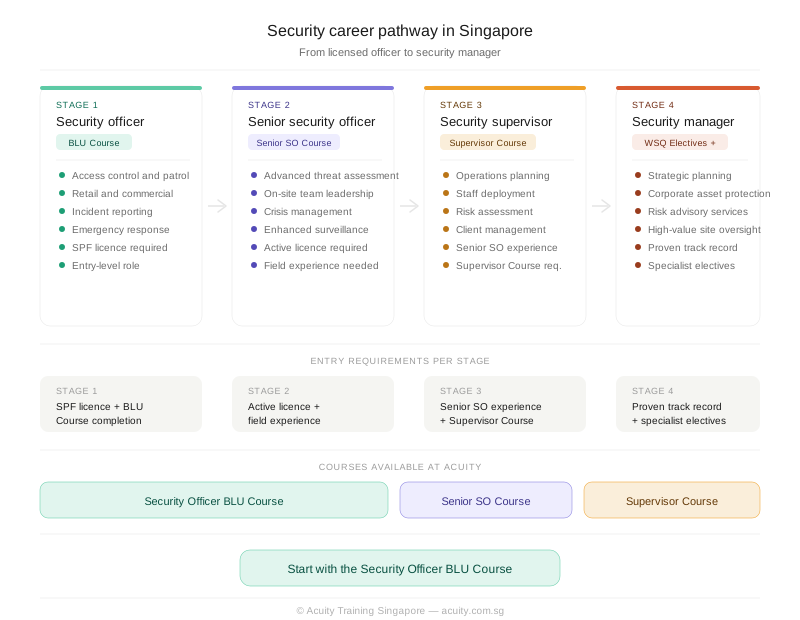
Completing a security course in Singapore opens up a range of employment and career advancement opportunities.
The security industry in Singapore offers structured career growth for committed professionals, with each level requiring formal qualifications that build on the previous one.
No prior security experience is required for the Security Officer BLU Course. It is designed for first-time entrants to the industry.
The BLU Course typically runs over several days of structured training. Duration varies by provider and scheduling format. Senior officer and supervisor courses are typically longer.
Eligible candidates may be able to access SkillsFuture funding or other government subsidies to offset course fees. Check with your training provider for current funding options.
The BLU Course is not a part-time programme — it requires full attendance during the scheduled training period. However, senior and elective courses may offer more flexible options.
Acuity offers a full suite of security training programmes designed to support professionals at every stage of their career — from first-time applicants to experienced officers seeking supervisory credentials.
With experienced trainers, structured curricula, and guidance on the SPF licensing process, Acuity provides security professionals with the preparation they need to succeed in Singapore’s regulated security industry.
For professionals looking to complement their security career with broader workplace skills, Acuity also offers Workplace Safety and Health training and Customer Management courses — practical additions for security officers working in customer-facing environments.
Yes. All practising security officers in Singapore must hold a valid Security Officer Licence issued by the SPF, which requires completion of an approved security course. Working without a licence is illegal under the Private Security Industry Act.
The BLU Course is for first-time entrants and leads to your initial Security Officer Licence. The Senior Security Officer Course is for experienced, licensed officers who want to advance to a more senior role with greater responsibilities.
Always check with the training provider that their course is approved by the Singapore Police Force. Approved providers should be able to confirm this clearly and provide supporting documentation if required.
Formal qualifications are a key part of career progression, but most employers also require a minimum period of practical experience before considering an officer for a supervisory role. Both training and experience matter.
Eligible candidates may be able to use SkillsFuture credits or other workforce development funding to offset the cost of approved security courses. Check with your training provider for the latest funding options available.
Please fill in the following details so we can assist you better.
This will close in 0 seconds